
Wearing a hat does not cause hair loss. Only a consistently tight fit that pulls on the hairline can contribute, and only over a long period, so for most people a hat does more to protect the scalp from sun and pollution than it does to thin the hair underneath.
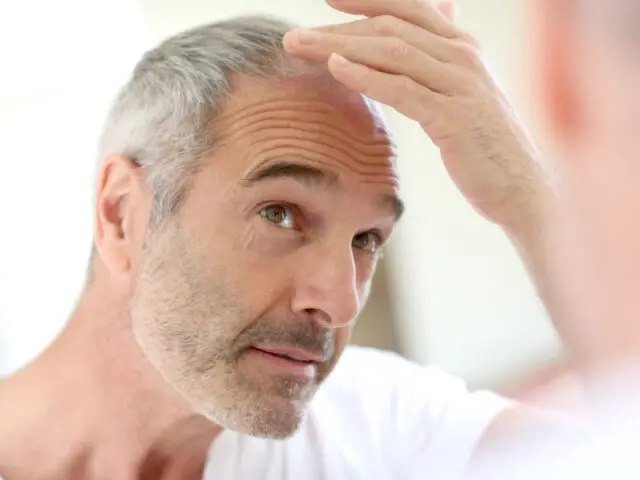
The Norwood Scale maps male pattern baldness across seven stages, from a slightly receding hairline through to loss across the crown and front. It gives surgeons and patients a shared language for describing progression, planning treatment and judging whether surgery is timely.
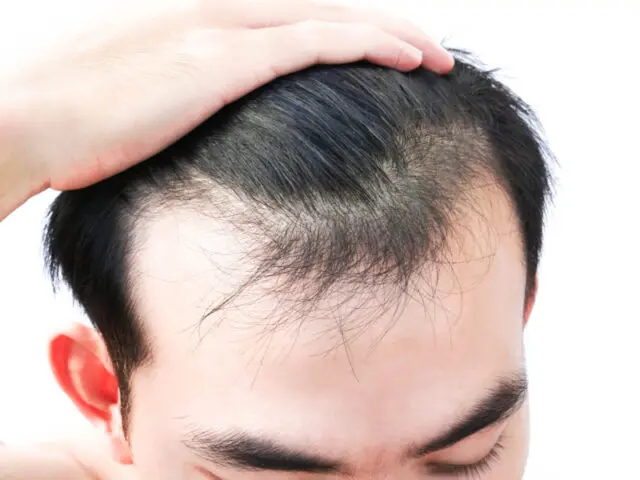
A widow’s peak is a naturally V-shaped hairline that many people are simply born with; it is genetic rather than a sign of hair loss. It only indicates a problem when the temples recede around it, which is the point at which softening or restoring the shape becomes worth discussing.
Crown thinning often goes unnoticed because you cannot see it in a mirror, and by the time it is obvious a good deal of density has already gone. Caught early, medication and PRP can slow it; once the area is bald it needs a transplant, and the crown takes more grafts than the hairline.
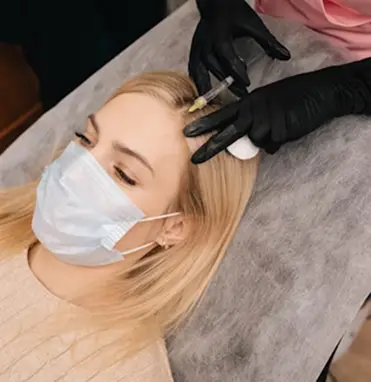
FUT remains the most efficient way to move a large number of grafts in one session, and it leaves the rest of the donor area intact for future work. It suits patients with advanced loss who keep their hair long enough at the back to cover a linear scar.